GRA Unveils Major VAT Reforms: Higher Threshold, Lower Rate, COVID Levy Gone from Jan 2026!

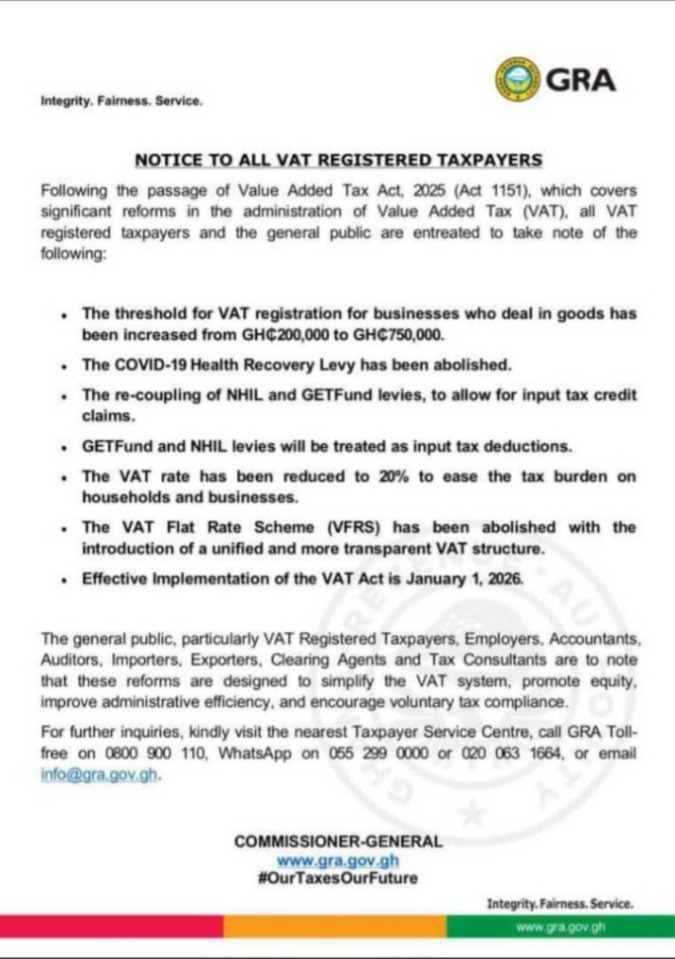
After the Value Added Tax Act, 2025 (Act 1151) was passed, the Ghana Revenue Authority (GRA) announced major changes to the country’s Value Added Tax (VAT) system. These changes will go into effect on January 1, 2026.
The GRA sent a notice to all taxpayers who are registered for VAT saying that the new law makes big changes that will make it easier to manage VAT, make people follow the rules, and lower the tax burden on homes and businesses.
One of the biggest changes is that businesses that sell goods now have to pay VAT on more sales. The threshold has gone up from GH¢200,000 to GH¢750,000. This change is meant to lower the number of small businesses that need to register for VAT.
The Authority also said that the COVID-19 Health Recovery Levy, which was put in place during the pandemic to help pay for the government’s costs, would no longer be in effect.
The new VAT structure has linked the National Health Insurance Levy (NHIL) and the Ghana Education Trust Fund (GETFund) levies again. This lets businesses claim input tax credits. Both taxes will now be seen as deductions from input tax.
The GRA says that the VAT rate has also been lowered to 20% to make it easier for people and businesses to pay their taxes.
The VAT Flat Rate Scheme (VFRS) is no longer in effect, making way for a single, clearer VAT system.
The GRA said that the changes are meant to promote fairness, make the government run more smoothly, and get people to pay their taxes on time.
It told VAT-registered taxpayers, employers, accountants, auditors, importers, exporters, clearing agents, and tax consultants to pay attention to the changes before they go into effect.
The Authority also told people to go to the nearest Taxpayer Service Centre or call the GRA’s toll-free number or use one of its official communication channels if they needed more information.